
Bhaiṣajyaguru: Iconography and rituals of the Medicine Buddha between North-western and Eastern India and Tibet
Shikha Gupta – Department of Asian and North African Studies (DSAAM), Ca’ Foscari University of Venice (2024-present)
Recipient of a PhD scholarship funded by the UBI Research Center.
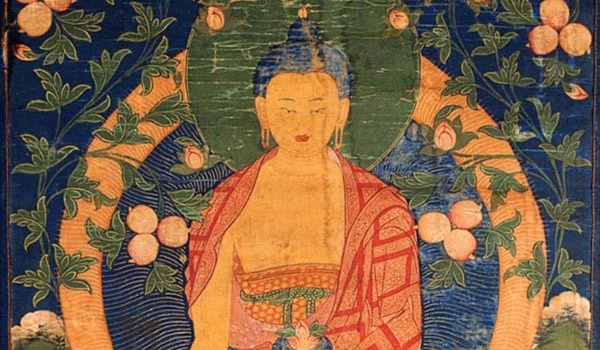
The study of the relationship between Buddhism and medicine has recently experienced a resurgence in Western scholarship, emerging as a dynamic new field of inquiry. While previous research has often emphasized the significance of East Asian Buddhism and its journey, Shikha’s study instead focuses on the history and art history of the cult of Buddha Bhaiṣajyaguru (the Medicine Buddha) in India, including the Gandhāran region (now in Pakistan). Titled “Bhaiṣajyaguru: Iconography and Rituals of the Medicine Buddha between North-western and Eastern India and Tibet,” the research examines the socio-political shifts that occurred and impacted the artistic and religious narratives within the cult and influenced its subsequent transmission to the Tibetosphere.
Shikha’s study is an attempt to debunk the assumption that the cult of Buddha Bhaiṣajyaguru never existed in India. Rather, it highlights two key periods: the 1st-4th centuries CE, when important texts related to the Medicine Buddha were developed in North-western India, and the 7th-10th centuries CE, when the cult underwent iconographic changes in Eastern India influenced by Ayurvedic medical knowledge. It therefore proposes new links in the chain of development and route of the cult’s spread: from North-western India to Central Asia to Eastern India and, finally, to Tibet.
Although the cult of Bhaiṣajyaguru did not flourish in early Indian Buddhism, its texts and medical practices have served as crucial vehicles for the cross-cultural dissemination of Indian medical ideas as they spread to other parts of the world during the first millennium CE. In Central Asia (Kucha, Ming-oi, Dunhuang), Tibet, and Southeast Asia (Thailand, Sri Lanka), the transmission of this knowledge laid the foundation for traditional medicine systems that are still widely practiced today.
Instead of the traditional art – history methodological approach, the research adopts a more critical approach by examining the socio-political matrix of Indian Buddhist art and iconography and its impact on Tibetan representations of the Medicine Buddha. This will help highlight the complex connection between Indian medical knowledge and Tibetan representation and practices. The important symbolism of the Medicine Buddha is not composed of mere symbols; it is also believed to be highly potent in ancient medicinal practices and has been used as an actual remedy in Tibetan medicine to this day.